


Our Fronius orbital welding systems cover pipe from 3mm to 168mm OD: autogenous fusion with a closed head for thin-wall joints, and multipass orbital TIG with wire feed on an open head for heavier walls. The work is carried out with reference to standards such as AWS D18.1 / D18.2, 3-A Sanitary Standards and EHEDG Guidelines (Doc 9 & 35). We bring the system to your site.
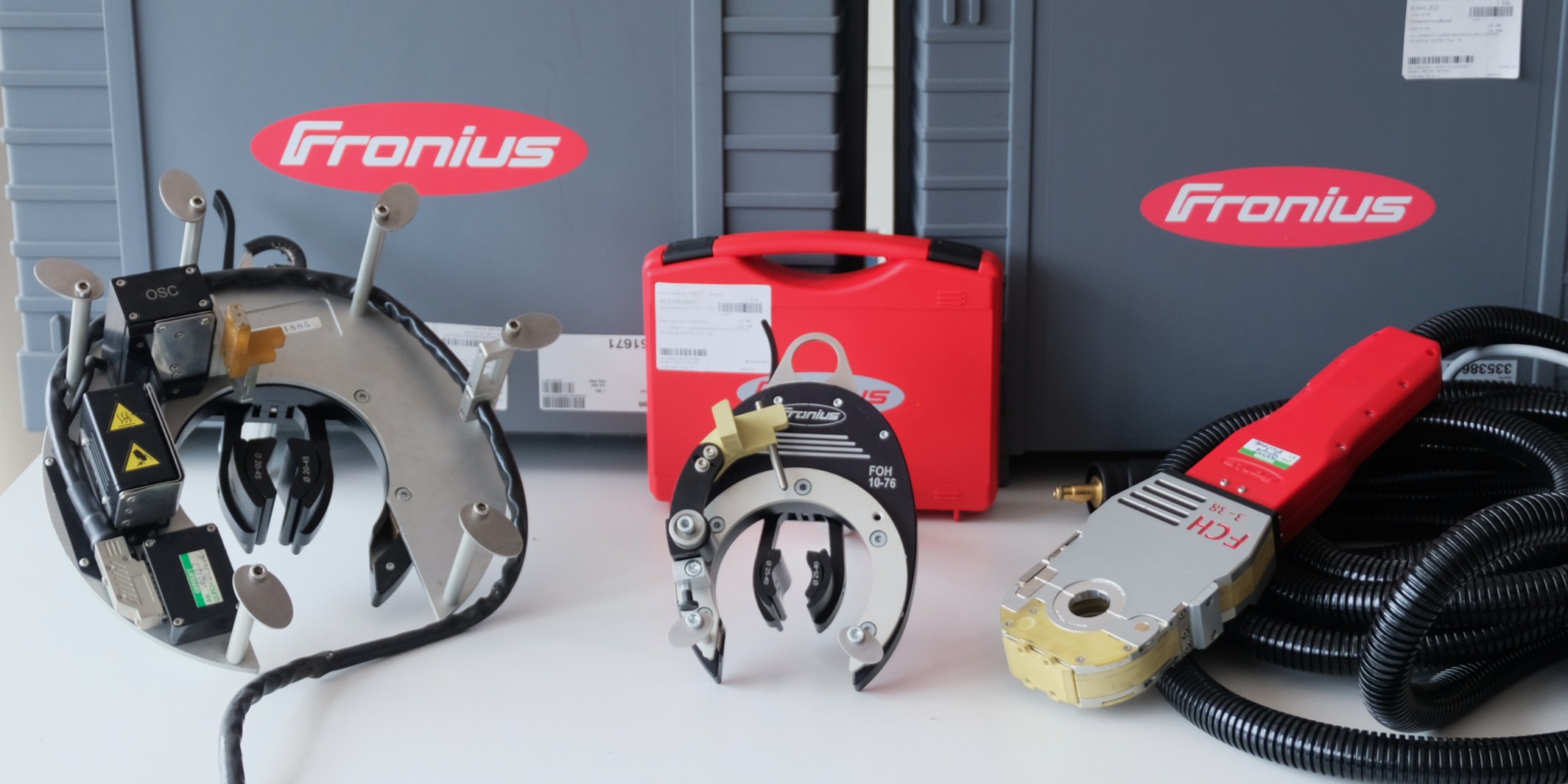
Three heads, one complete range
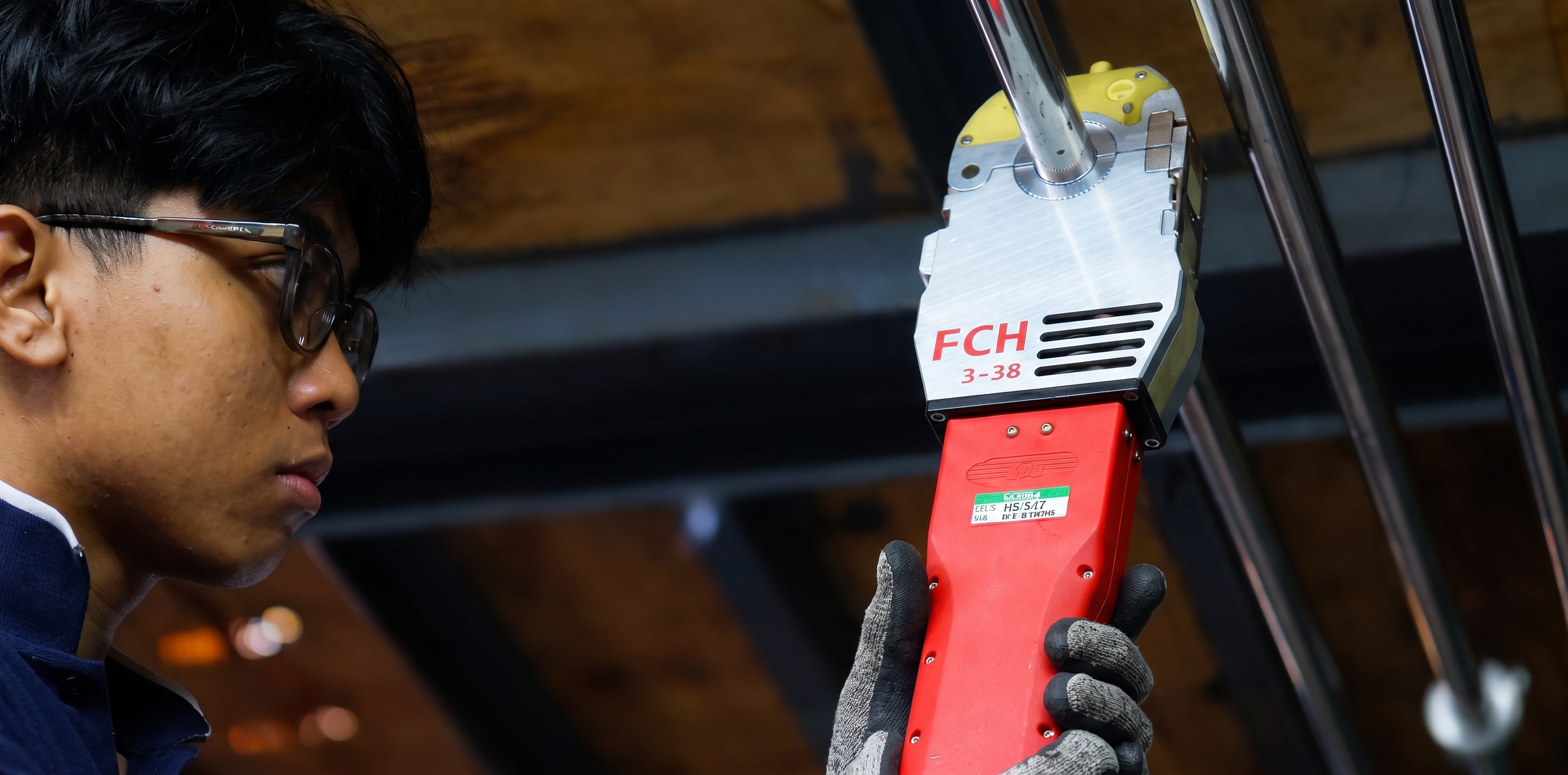
- FCH 3-38 (Closed Head): The head encloses the pipe completely, giving a tight gas shield and a stable arc. It handles pipe from 3mm to 38mm OD by autogenous fusion without filler wire, which suits thin-wall joints up to 1.5mm.
- FOH 10-76 (Open Head): The head clamps on the outside of the pipe, allowing more freedom in positioning. It covers mid-size pipe from 10mm to 76mm OD.
- FOH 40-168 (Open Head): Equipped with AVC and OSC, it covers pipe from 40mm to 168mm OD. The KD 4000 D-11 wire feeder makes multipass welding on thick-wall pipe possible.
| Specification | FCH 3-38 | FOH 10-76 | FOH 40-168 |
|---|---|---|---|
| Head Type | Closed | Open | Open |
| Pipe Diameter (OD) | 3 – 38 mm | 10 – 76 mm | 40 – 168 mm |
| Wall Thickness | ≤ 1.5 mm | Thin to medium | Medium to thick |
| Welding Method | Autogenous fusion | Orbital TIG | Multipass orbital TIG |
| Filler Wire | No | No | Yes (0.8 – 1.2 mm) |
| AVC (Arc Voltage Control) | No | No | Yes |
| OSC (Oscillation / Weaving) | No | No | Yes |
| Torch | Integrated in head | TTWO 2000 F++ | TTWO 2000 F++ |
| Torch Cooling | Water-cooled | ||
| Hosepack Length | 8 m | 5 m | 5 m |
| Head Weight | 1.68 kg | 2.39 kg | 6.96 kg |
| Welding Positions | PC, PF, PG | ||
| Best Suited For | Small pipe, thin wall, sanitary and precision instrument joints | Mid-size pipe, process systems, thin to medium wall | Large pipe, thick wall, full-penetration multipass |
Two methods for two different jobs
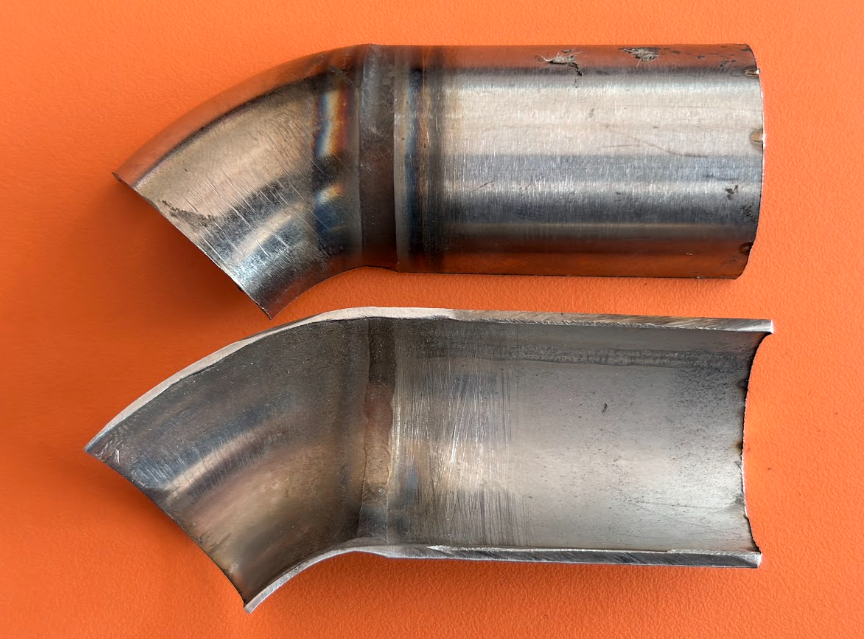
Autogenous fusion is welding without filler: the tungsten arc melts both pipe ends until they fuse into one, with no added material. The result is a clean joint with a smooth bore, well suited to thin-wall pipe that needs no extra metal.
Thicker walls need the joint chamfered before welding. This is where multipass orbital TIG with wire feed takes over. The torch travels around the pipe with a weaving motion from the OSC function, while the KD 4000 D-11 feeder delivers 0.8–1.2mm filler wire consistently on every revolution, pass after pass, until the joint is filled from root to cap.
Seven controlled steps, every joint
- Material Inspection
We verify dimensions, ovality and the physical condition of the pipe. - Precision Cutting
Orbital cold cutting gives a square 90° cut with no HAZ. - Cleaning & Facing
Deburring, squaring of the joint ends and removal of residue. - Alignment & Tacking
Clamping and locking the joint in position. - Argon Back Purging
Pure argon flows through the pipe bore to prevent internal oxidation (zero sugaring). - Welding
Automated, programmed welding through the Fronius FPA 4030 in accordance with the WPS. - Inspection & Records
Visual check of the outer and inner bead, and a printed parameter log for each joint.
When the pipe is not perfectly round
In industrial settings, a perfectly round pipe is the exception. Small variations in roundness change the electrode-to-pipe distance at each point of the rotation, and a changing distance means inconsistent penetration.
AVC (Arc Voltage Control) on the FOH 40-168 reads arc voltage in real time and adjusts the torch position automatically, keeping the electrode gap constant all the way around. You get a consistent joint even on pipe that is slightly out of round.
OSC (Oscillation) moves the torch sideways during rotation, producing the weave needed to fill the chamfer evenly on each pass. Both functions run together on the FOH 40-168, fully controlled by the FPA 4030.
Every joint can be verified
The Fronius FPA 4030 records the full set of process parameters for every joint: current, voltage, torch rotation speed, position and weld time. We print this data directly from the system and hand it to you as quality documentation.
For projects that require joint-by-joint traceability, such as process piping in chemical plants, sanitary lines in food facilities, or installations built to standards such as AWS D18.1 and D18.2, 3-A Sanitary Standards or EHEDG Guidelines, this record is part of the work itself.
A good weld starts with preparation
We use an orbital pipe cutter so every cut is square and clean, with no residual heat to affect the material structure at the joint. For thick-wall pipe that needs multipass welding, we chamfer both ends to the joint specification before welding begins.
During welding, argon flows through the inside of the pipe as a back purge. It protects the inner surface of the joint from oxidation and leaves a clean internal bead. For systems that call for a crevice-free, discolouration-free bore, this step is essential.
Industries we serve
We have used this system in a chemical plant serving the plastics industry, a nationwide food production facility, and a range of other industrial process piping installations. The material we work with is stainless steel across various grades.
Our sectors include chemicals and petrochemicals, food and beverage production, power generation, oil and gas, and general process pipe fabrication. If you are unsure whether our system fits your specific application, tell us what you need first.
The people behind the weld head
A Fronius system of this class asks for more than an operator who knows where the start button is. We require the operators on this work to hold MIGAS certification and to have real field experience with the system, beyond a controlled workshop.
Before any work starts on the actual pipe, we run an assessment with you: pipe material, wall thickness, applicable welding standard and documentation requirements. We prepare and validate the Welding Procedure Specification in advance.
We come to your site
The complete system, including weld heads, FPA 4030 controller, TransTIG 3000 power source, KD 4000 D-11 wire feeder, cooling unit and all supporting equipment, can be loaded up and brought to you. We come to your pipe spool fabrication shop, your construction site, or the production facility that needs pipe joints installed or replaced.
Contact us to discuss your project requirements.
Contact Us
Tell us your pipe specification. We will handle the rest.
Available for technical discussions, site assessments and job scheduling anywhere in Indonesia.
WhatsApp 0811-9-52737
Questions and Answers
What pipe diameters can you weld?
We weld pipe from 3mm to 168mm OD. The FCH 3-38 handles small pipe up to 38mm by autogenous fusion. The FOH 10-76 covers mid-size pipe, and the FOH 40-168, with AVC, OSC and wire feed, takes large pipe up to 168mm.
Which materials can be welded?
Stainless steel in various grades is our main material for orbital welding. We can also weld carbon steel, titanium and nickel-based alloys. Aluminium is outside the range of our system, because our power source operates on DC.
When is autogenous fusion enough, and when is multipass with wire feed needed?
Autogenous fusion without filler suits thin-wall pipe up to around 1.5mm. Above that, the joint needs a chamfer and filler wire, applied by multipass orbital TIG with wire feed. We decide the right method once we know your pipe specification.
Can the work be done on-site, or does it have to go to a workshop?
Our entire system is portable. We come to your pipe spool fabrication shop, construction site or production facility, anywhere in Indonesia.
Is there documentation for every joint?
Yes. Our Fronius FPA 4030 control system records current, voltage, rotation speed, torch position and weld time for every joint. We print this report and hand it to you. For projects that require joint-by-joint traceability with reference to AWS D18.1 / D18.2, 3-A Sanitary Standards or EHEDG Guidelines, this is already a standard part of our work.
What about pipe that is not perfectly round?
The AVC (Arc Voltage Control) function on the FOH 40-168 adjusts the torch position automatically based on changes in arc voltage, keeping the electrode gap constant even when the pipe is out of round. Joint consistency holds regardless of the pipe's physical condition.
What needs to be prepared before work begins?
We first run an assessment with you: pipe material, wall thickness, applicable welding standard and documentation requirements.
Which standards does this work reference?
Our orbital welding process references standards such as AWS D18.1 and D18.2 for stainless steel pipe welding in sanitary applications, 3-A Sanitary Standards, and EHEDG Guidelines Doc 9 and 35 for piping systems in hygienic environments. For the specific standards your project requires, contact us to discuss them first.
How do I contact Fotonix about orbital welding work?
Call or WhatsApp us on 0811-9-52737, or send your project details to